COMPUTATIONAL THINKING
This module, being our first design course, introduced a completely new way of observing the world around us. It taught us to read a site not just by its visible features, but by interpreting those details in a way that reveals a deeper, more nuanced perspective.
It is not just the elements that are present, but also the ones that are absent, which play an equally important role in shaping the site.
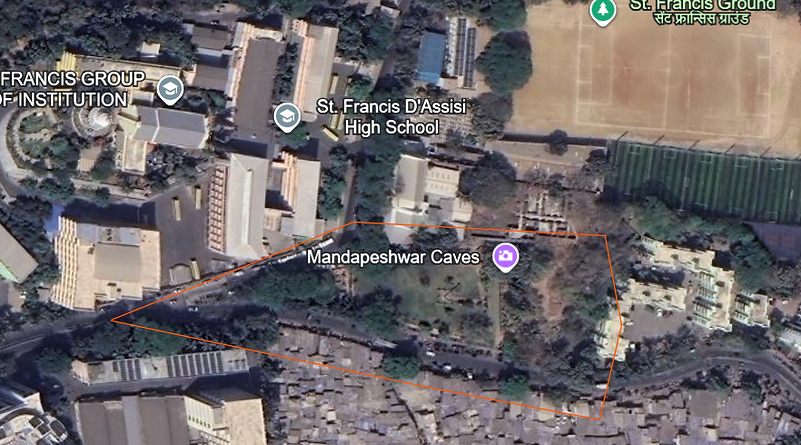
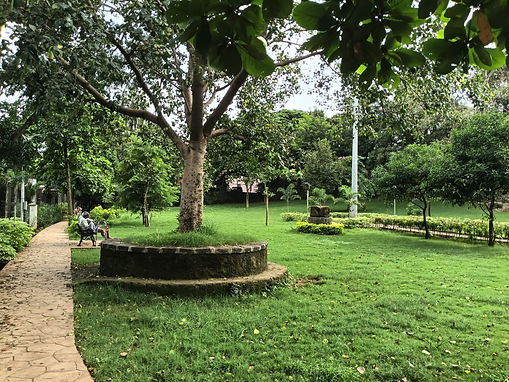
The site assigned to me was the Mandapeshwar Caves, located in IC Colony, Borivali (West), an area known for its dense greenery and hilly terrain. The caves date back to the 6th century, originally rock-cut Buddhist monasteries and later converted into a place of worship dedicated to the Hindu god Shiva in the 8th century.
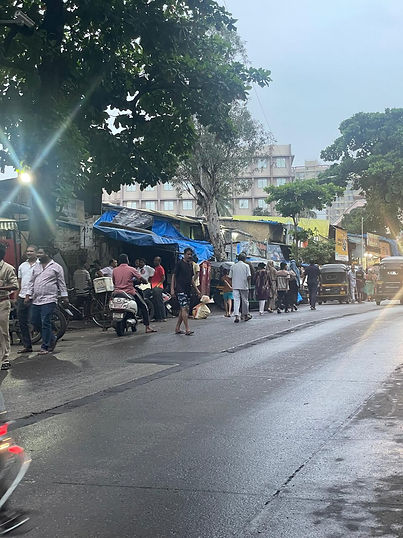
The area around the caves is quiet and peaceful, in contrast to the busy street just across, which is lined with a vast settlement and storefronts.
SITE LOCATION
SITE PHOTOGRAPHS




SITE PLAN
.jpg)
OBSERVATION DIAGRAMS

VEHICLES PARKED
The space outside the boundary wall of the cave and the park next door is an informal parking for rickshaws and two-wheelers.

AREA OCCUPIED BY WOMEN
Women predominantly occupy the space within the cave, while the surrounding areas serve mainly as transitional zones for them.

AREA OCCUPIED BY MEN
The space around the storefronts and the informal parking spaces i.e., the street is majorly occupied by men to rest and socialize.
My observations focused on the use of both formal and informal spaces. Using the boundary wall as a fixed reference point, I created diagrams to map the circulation of people in relation to the nature of the surrounding spaces.
The footpath adjacent to the boundary wall remained largely unused due to the informal parking created by rickshaws and two-wheelers. As a result, pedestrian movement shifted onto the street, making it busier with the constant flow of both vehicles and people. Men—primarily rickshaw drivers—parked their vehicles along the roadside and spent their time across the street, where the storefronts, also operated by men, are located.
This led to a stark contrast in spatial character: the area outside the boundary wall was loud and saturated with activity, while the space within the boundary—cooled by vegetation and centered around the cave—remained calm and quiet.
This dynamic also influenced women's movement. They appeared more comfortable spending time in and around the cave, rather than near the storefronts.

"WAIT", WHAT DO YOU MEAN BY THAT?
To me, waiting is not always a conscious act or something done with a clear purpose. My idea of waiting is simply being-- To wait is to stay or to pause. How do you experience time in doing so? And what is it that you do when you pause?
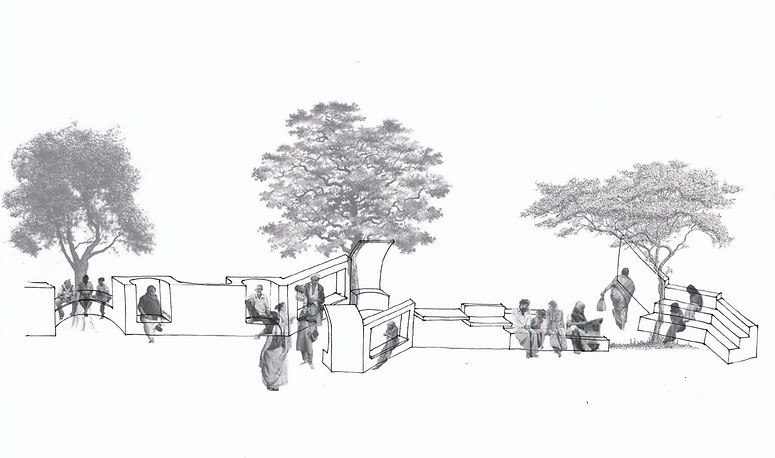
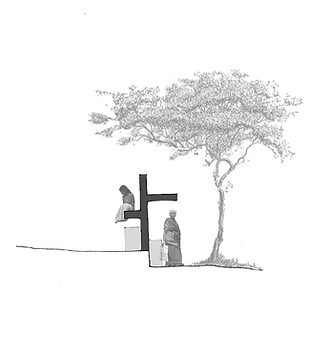
Furthermore I also studied the body languages of women v/s that of men while waiting/resting and how is that affected by the spatial configuration around them.
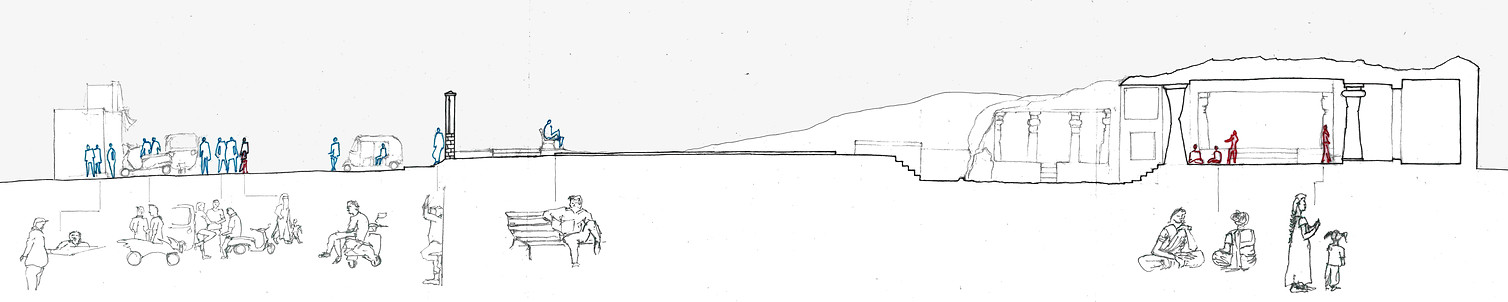
A SECTION ILLUSTRATING THE BODY LANGUAGE AND POSTURES OF MEN AND WOMEN WITH RESPECT TO THE ARRANGEMENT OF SPACE AROUND THEM
CONCEPT:
The concept behind my waiting space focuses on creating a comfortable environment for both men and women.
The design should allow individuals—regardless of gender—to sit freely, whether they wish to engage with others or prefer solitude.
ADDITIONAL PROGRAM:
In addition to the waiting space, the program includes incorporating an existing tea stall from across the street. The aim is to integrate it centrally within the design—making it easily accessible to everyone, while avoiding congestion at any single point.
Based on my observations and the insights drawn from them, the site I have chosen for intervention is as follows:
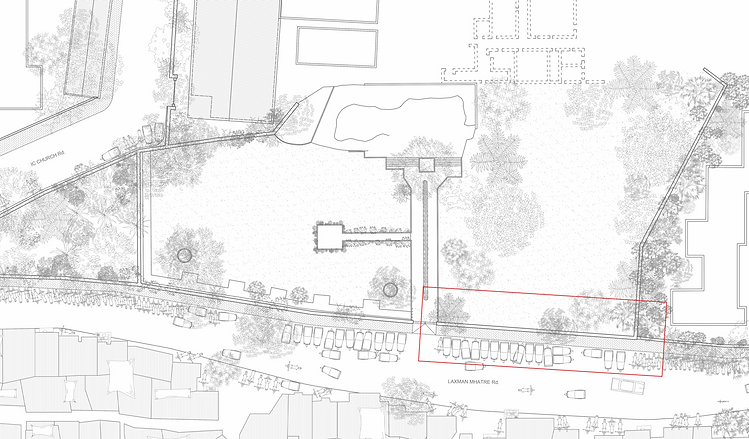

LOGIC I:
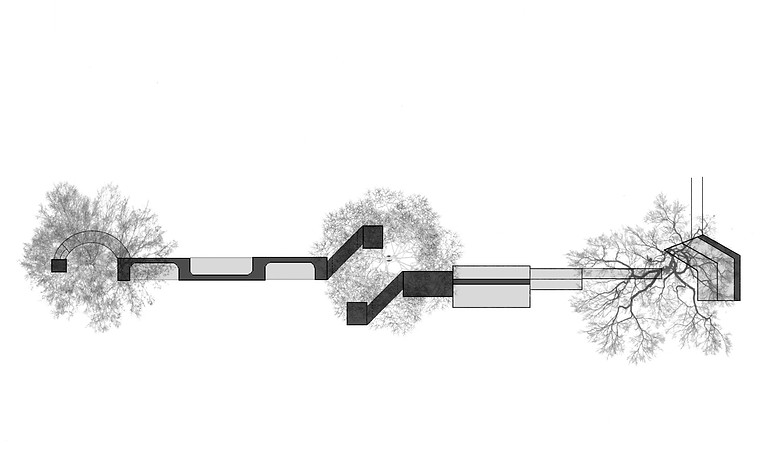
Since my design involves modulating the boundary wall itself to incorporate both, seating and access to the caves, I began by studying the existing trees along the length of the wall.

I introduced punctures in the wall at the nodes where trees were located to create through-and-through access around them.

LOGIC II:
Once the access points were defined, I introduced directionality at these nodes to guide crowd circulation through the space in a more intentional and varied manner.

After that was established, the form began to evolve through the introduction of elements at varying heights, allowing people to engage with the design in different ways at different intervals.
DESIGN PLAN
DESIGN SECTIONS

SECTION AA'
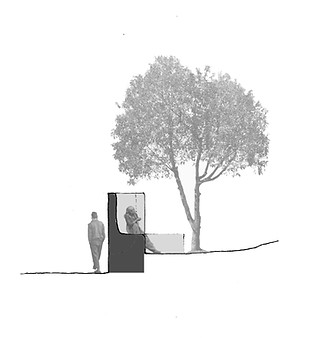
SECTION BB'
SECTION CC'
DESIGN ISOMETRIC